
May 28, 2025 | Slip and Fall
The National Floor Safety Institute—a national organization focused on the prevention of slips, trips, and falls—has reported that hundreds of thousands of people seek professional medical care for slip-and-fall-related injuries in the United States each year. Likewise, the World Health Organization has reported that over 37 million falls are severe enough to require medical attention yearly. Older adults (especially senior citizens) are at particular risk of physical injury, or even death, as a result of an unintentional slip and/or fall.
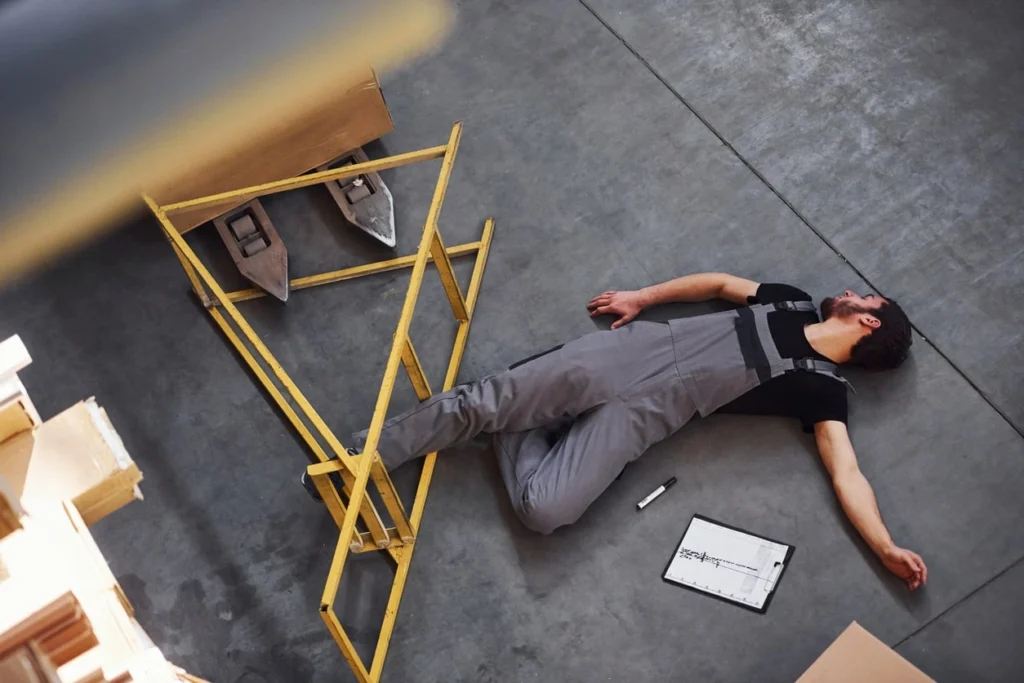
If you have been hurt in a slip, trip, or fall caused by another’s carelessness or negligence, you may be entitled to financial compensation. At McGuire Law Firm, we have extensive experience with slip-and-fall claims, and we are ready, willing, and able to meet the needs of any case. While every case is different, aspects of litigating those cases remain constant:
The Starting Point: An Overview of Premises Liability
Under Oklahoma law, property owners, managers, and occupiers (e.g., renters) have a legal duty to “exercise reasonably care” in maintaining their property and premises in a “reasonably safe condition” and, in some circumstances, even to warn of “conditions which are in the nature of hidden dangers, traps, snares, or pitfalls. The extent of this duty turns on the classification of the person injured—i.e., as a trespasser, a licensee (i.e., someone with permission to enter), or an invitee (in essence, a member of the public entering property open to the public). Under this framework—at least in the case of a non-trespasser—premises liability arises when the property owner breaches his or her duty, such as when:
- a dangerous condition exists;
- the property owner, manager, or the like knew or should have known about the dangerous condition; and
- the property owner, manager, or the like failed to take reasonable steps available to correct the dangerous condition, or failed to provide an adequate warning.
Proving Negligence and Recovering for a Slip and Fall Injury
In order to recover from an injury resulting from a slip, trip, and/or fall, you will be required to prove negligence. To prove the tort of negligence, a plaintiff must prove—by a preponderance of the evidence—that the premises owner, manager, etc., failed to exercise “reasonable care” in maintaining the condition of his or her premises, that you were injured on that premises, and that a dangerous condition or feature caused your injury. Without proof establishing negligence on the part of the premises/property owner, manager, etc., you will not be able to hold the same liable for your injuries.
To illustrate the nature of a negligence claim, consider the following scenarios:
- A grocery store employee walks through a puddle of clear spilled liquid on the floor of a typically busy aisle in the grocery store, nearly falling in the process. The employee decides to locate help to clean up the puddle but gets distracted and fails to take any action addressing the liquid. The puddle remains on the floor for two hours before a customer, who did not see the puddle, slips and falls, causing severe injury. This would likely constitute negligence. The grocery store knew of the existence of the puddle and that the same could cause a fall. A customer then did fall and, before doing so, did not see the puddle and could not have avoided injury via the same.
- Multiple tenants living on the second floor of an average apartment building notify their landlord of a weak/loose railing along the only stairwell to the second floor. The landlord receives these complaints, assuring each reporting tenant that action will be taken. Three days go by, during which time the landlord fails to contact someone for a review or assessment of the railing, and fails to post any warnings near the railing identifying its potential weakness. The landlord also does not tell any non-reporting tenants of the concerns received from their neighbors about the stairwell railing. On the fourth day, a guest intends to visit his sister on the second floor of the apartment building. As he uses the stairs, he leans on the railing—but immediately thereafter, the railing breaks, causing the man to fall and suffer serious injuries. This would likely constitute negligence. The landlord knew of the weakness in the stairwell railing and did nothing to respond to the same. The landlord also failed to warn second floor residents of the potential danger, resulting in a later injury to a licensee on the premises (i.e., a guest of a tenant). That licensee/guest, further, would have had no way of knowing of any risk posed by the railing prior to his injury.
- The employee of a large department store receives word that a woman slipped and fell on black ice accumulated just outside the front door of the store. In response, the employee is tasked with salting the sidewalk outside and placing “CAUTION: WET SURFACE” signs near the front door. The employee intends to undertake these tasks, but first takes his one hour lunch break. During this lunch break, another woman slips just a few feet away from the location of the fall earlier reported—and again, on black ice. This would likely constitute negligence. The department store knew that black ice existed outside its front door and that the same could cause a fall. The department store told an employee to do something about it, but he failed to act before another fall. As black ice is not typically visible or obvious to the average person, persons entering the store would have no way of knowing of any risk posed by the same.
The Best Approach: Let a Lawyer Review Your Case
Slip and fall cases can be straightforward in theory, but they are often complex in practice. Property owners and their deep-pocketed insurers will often scrutinize every detail of a premises-liability claim and/or complaint to avoid paying necessary compensation. For this reason, it is critical that you hire an attorney to assist you in any claim arising out of a slip-and-fall accident. An experienced premises liability attorney—like Kent McGuire and his team at McGuire Law Firm—can review the facts, assess your case, gather evidence, and advise you on the est path forward to receiving justice.
Contact an Oklahoma City Slip-and-Fall Accident Attorney
At McGuire Law Firm, Kent McGuire and his team have extensive experience with premises liability actions of all stripes, including slip-and-fall accident cases. So if you or your loved one has been hurt via a slip, trip, and/or fall, we are here to help! Please contact us today for a free, no-obligation initial case review.