
December 18, 2025 | Car Accidents
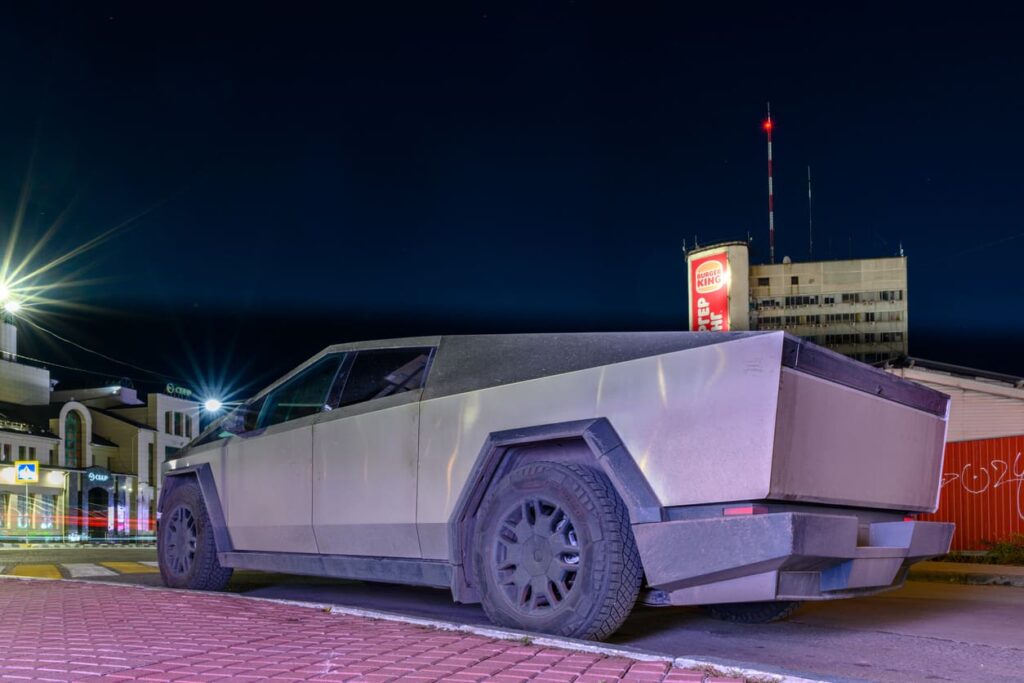
There are plenty of Tesla Cybertrucks on the road in Oklahoma. Unfortunately, there have been some serious questions about the safety of the design. In fact, the National Highway Traffic Safety Administration (NHTSA) opened an investigation into certain aspects of the vehicle’s Full Self-Driving (FSD) system. Here, our Experienced Oklahoma City car accident lawyer provides an overview of key things to know about the safety questions that have been raised about Tesla’s Cybertruck design.
The Tesla Cybertruck Full-Self Driving (FSD) Technology Under Federal Scrutiny
Tesla Full-Self Driving (FSD) is an advanced driver assistance system (ADAS) designed to automate certain aspects of vehicle operation, such as steering, acceleration, and braking. While marketed as a step toward autonomous driving, FSD still requires the driver to remain attentive and ready to take control at all times. It builds upon Tesla’s Autopilot system by offering features like automatic lane changes, navigation on highways, and traffic light and stop sign recognition.
With that being said, the FSD mode is now under serious scrutiny by federal highway safety officials. Indeed, the NHTSA’s Office of Defects Investigation is actively reviewing crashes linked to Tesla’s Full-Self Driving (FSD) software. That software is available in the Cybertruck, as well as other models. According to federal records, the FSD system has already been implicated in multiple collisions, including a fatal incident involving a pedestrian.
The Cybertruck’s Unconventional Design May Compromise Pedestrian Safety
Unlike most modern vehicles that are engineered with crumple zones and smoother contours that help to reduce harm in pedestrian impacts, the Tesla Cybertruck features a rigid, angular frame constructed from ultra-hard stainless steel. Critics, including experienced traffic safety engineers cited by Jalopnik, have raised concerns that the sharp edges and stiff panels may increase the risk of severe or fatal injuries in the event of a pedestrian collision.
It should be noted that as of mid-2025, NHTSA has not released comprehensive crash test data for the Tesla Cybertruck, including pedestrian-specific safety metrics. The regulatory gap raises questions, including about whether the Cybertruck’s safety features, or lack thereof, comply with broader industry standards and the best safety practices.
The Cybertruck is Enormous, and That Makes it Inherently Hazardous
The Tesla Cybertruck weighs over 6,800 pounds, far more than the average passenger vehicle. In fact, the Cybertruck is currently one of the largest passenger vehicles in North America. That is a safety issue. The weight disparity between the Cybertruck and other vehicles significantly increases the risk of catastrophic injuries in multi-vehicle collisions, especially with pedestrians, cyclists, motorcycles, and even small sedans.
Schedule Your Free Consultation With Our Oklahoma City Vehicle Defect Lawyer Today
At McGuire Law Firm, our Oklahoma City car accident lawyer has the experience needed to take on vehicle defect claims. If you were involved in any type of crash in a Tesla Cybertruck, we are here to help. Please do not hesitate to contact us today for a free, no-obligation consultation. Our firm handles vehicle defect cases in Oklahoma City and throughout the wider region.